

Wilderness First Responder (WFR): Training, Certification, and Course Guide
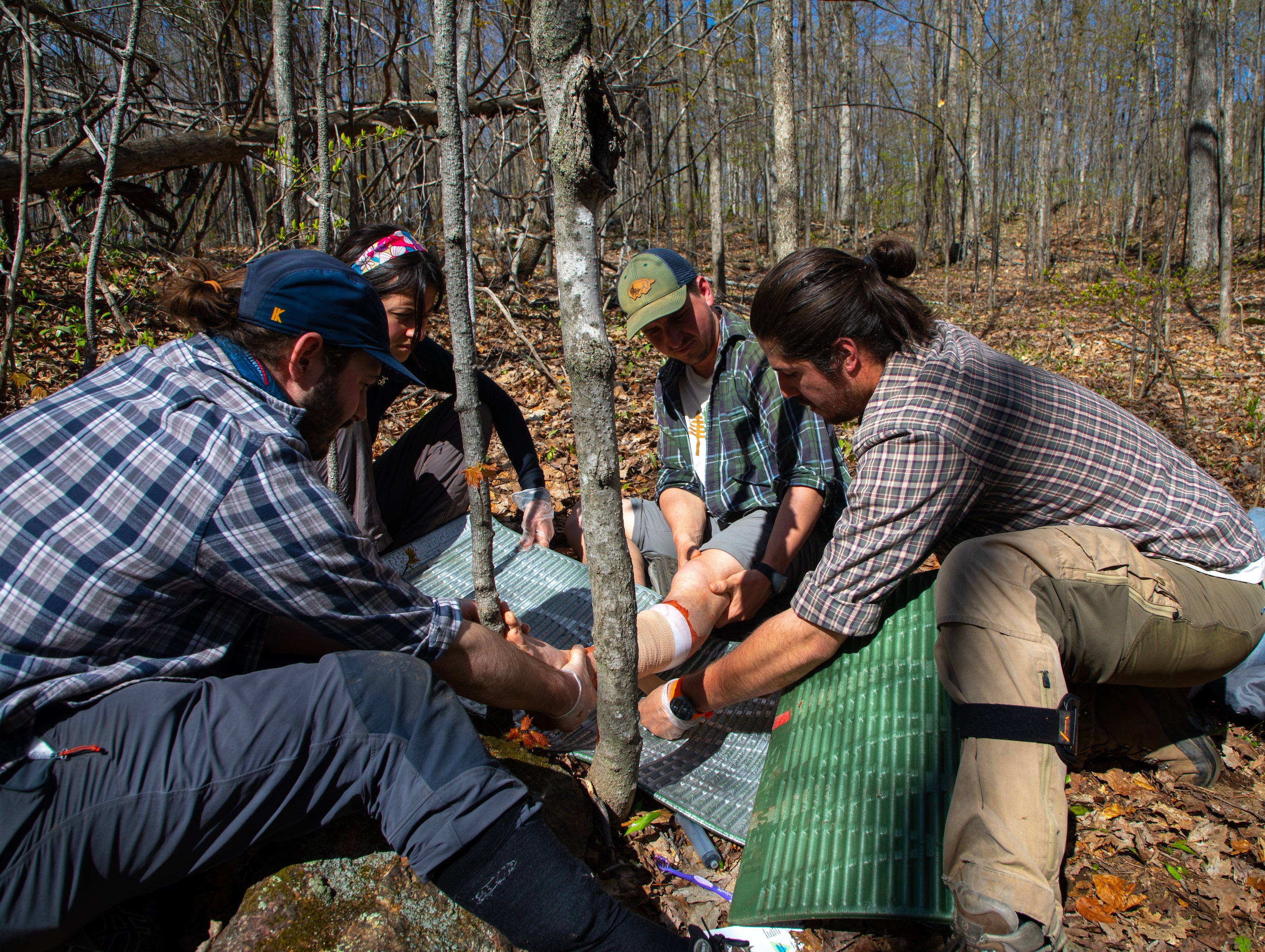
A Wilderness First Responder (WFR) is someone trained to handle medical emergencies in remote places where help may be hours or even days away. This training is often taken by professional guides, outdoor educators, search and rescue, and people who work and travel in remote areas.
A WFR knows how to assess injuries and treat common ones like wounds and musculoskeletal injuries, and deal with environmental issues like hypothermia, heat illnesses, and lightning. They’re also trained in critical decision making, leadership, and evacuations.
A Wilderness First Responder can perform advanced treatments and provide medications that are not standard for urban first responders and emergency medical technicians (EMTs).
WFR Course Options at Boreal River
Wilderness First Responder (WFR)
80 hours over 5 or 8 days
For professional guides, outdoor educators, search and rescue, anybody travelling in remote areas; beginner to advanced.
This course will prepare you to assess and manage medical problems in isolated and remote environments.
Costa Rica Wilderness First Responder
7-day all-inclusive; 5 days of course
Take your (WFR) course in Costa Rica—and build your medical skills through hands-on training.
For anyone physically active who travels to remote places, outdoor educators, guides, search and rescue; beginner to advanced.
Wilderness First Responder – Bridge (WFR-Bridge)
40 hours over 4-5 days
This course is designed for graduates of our Wilderness Advanced First Aid (WAFA) courses that want to continue their training to the Wilderness First Responder (WFR) level.
Wilderness First Responder – Recertification (WFR-Recert)
3, 4 or 5 days
For certified Wilderness First Responders, intermediate to advanced who want to renew their training and get recertified for another three years. You’ll get ample opportunity to practice your skills, expand your understanding, and think critically.
Compare WFR With Other Wilderness First Aid Courses
| Course | WFR (80hr) | WFR-Bridge (40hr) | WALS (5 day) | WAFA (40hr) | WFA (20hr) |
|---|---|---|---|---|---|
| Duration | 5 or 8 days | 4-5 days | 5 days | 4-5 days | 2-3 days |
| Best for | Pro guides, outdoor educators, SAR | WAFA grads upgrading | Medical practitioners | Backcountry travellers, field personnel | Frontcountry, assistant leaders |
| Level | Beginner-Advanced | Intermediate-Advanced | Advanced | Beginner-Intermediate | Beginner |
| Prerequisite | None | WAFA certification | Medical licence with advanced cardiac life support | None | None |
| CPR | CPR-BLS (Basic Life Support) used to be CPR Healthcare Provider | CPR-BLS (Basic Life Support) used to be CPR Healthcare Provider | n/a | CPR C (adult, child, infant) | CPR A (adult) CPR C (adult, child, infant) can be added for free for any student by request |
| Certification | WMA WFR | WMA WFR | WMA WALS | WMA WAFA | WMA WFA |
WFR (80hr)
WFR-Bridge (40hr)
WALS (5 day)
WAFA (40hr)
WFA (20hr)
Why Train with Boreal River Rescue?
We can think of a few reasons why you should do your wilderness first responder training with Boreal River Rescue.
Our partnership with Wilderness Medical Associates. They’ve set the standard since 1982, taught on all 7 continents, and the WMA certification is recognized worldwide. With their curriculum, our courses stand out in 3 key ways.
- We have a structured Patient Assessment System. This guides the process from reaching a patient through to a full treatment plan. Instructors teach general principles about how the body works (no memorizing lists of symptoms and treatments), so you know what’s going on with an injury or illness.
- Our instructor development model is equally rigorous. Instructors are selected for their experience in patient care, the outdoors, and teaching. They apprentice across many courses before leading their own. The result is a flexible, inclusive learning environment that meets students wherever they are.
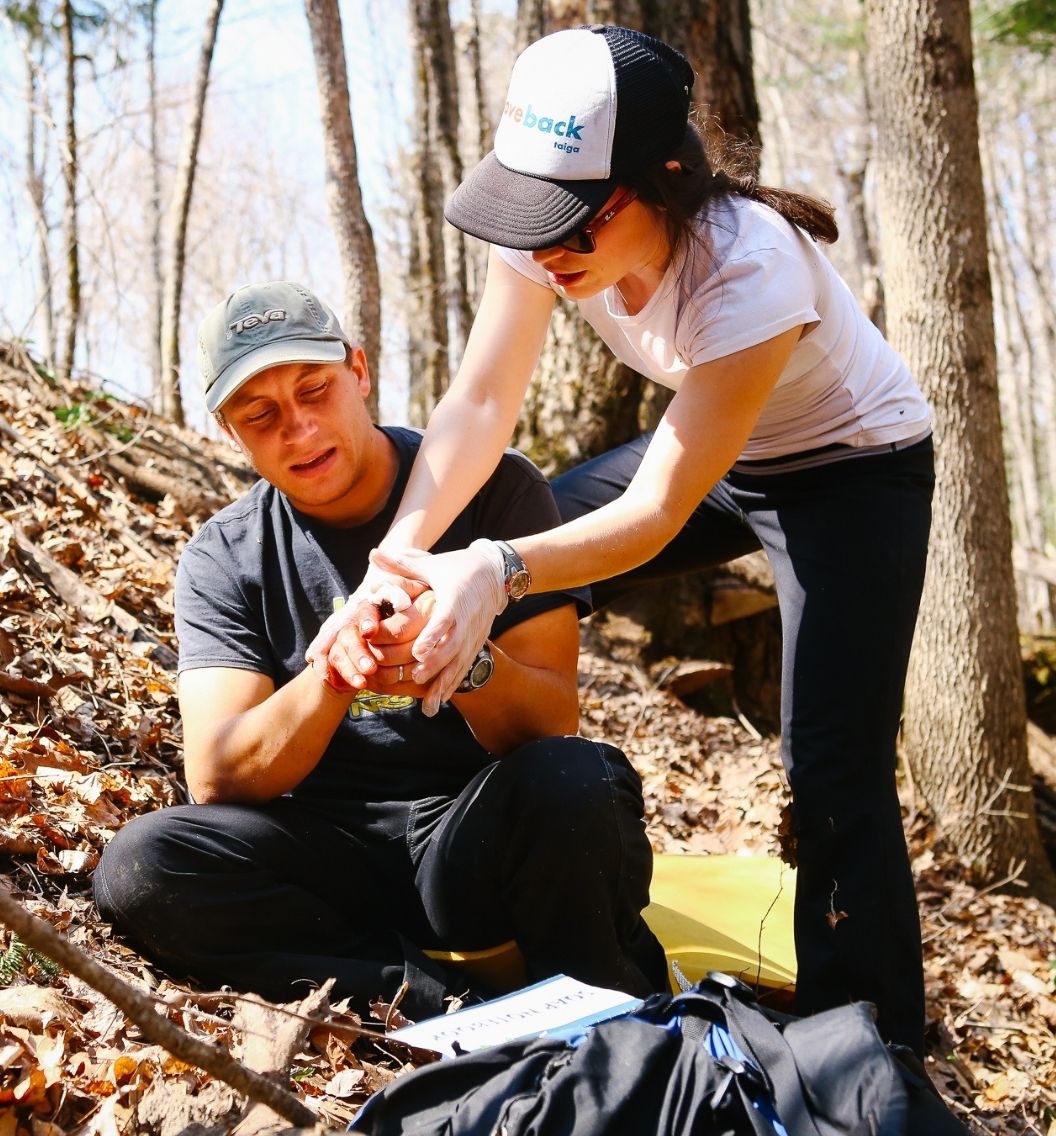
- A deliberate learning progression moves students from online pre-work and classroom discussion through hands-on drills and into realistic, stress-added scenarios — complete with staging, makeup, and debriefs.
Fantastic locations: Our courses are taught across Canada, from British Columbia to Nunavut to Newfoundland, and at select international destinations. We choose locations that put you in the wilderness from day one, supporting our hands-on, scenario-based approach to wilderness medicine training.
Students love us! We’ve got over 250 5-star reviews.
Where to Take Your WFR Course
Boreal River Rescue offers Wilderness First Responder (WFR), WFR Recertification, WFR Bridge, and Wilderness First Aid (WFA) courses at incredible destinations coast to coast.
Our public courses are held at a growing selection of locations, including:
- Cantley, QC — our retreat and training facility just outside Ottawa-Gatineau
- Mansfield, ON — approximately 1 hour north of Toronto
- Antigonish, NS — approximately 2 hours north-east of Halifax
- Squamish, BC
- Thunder Bay, ON
- Winnipeg, MB
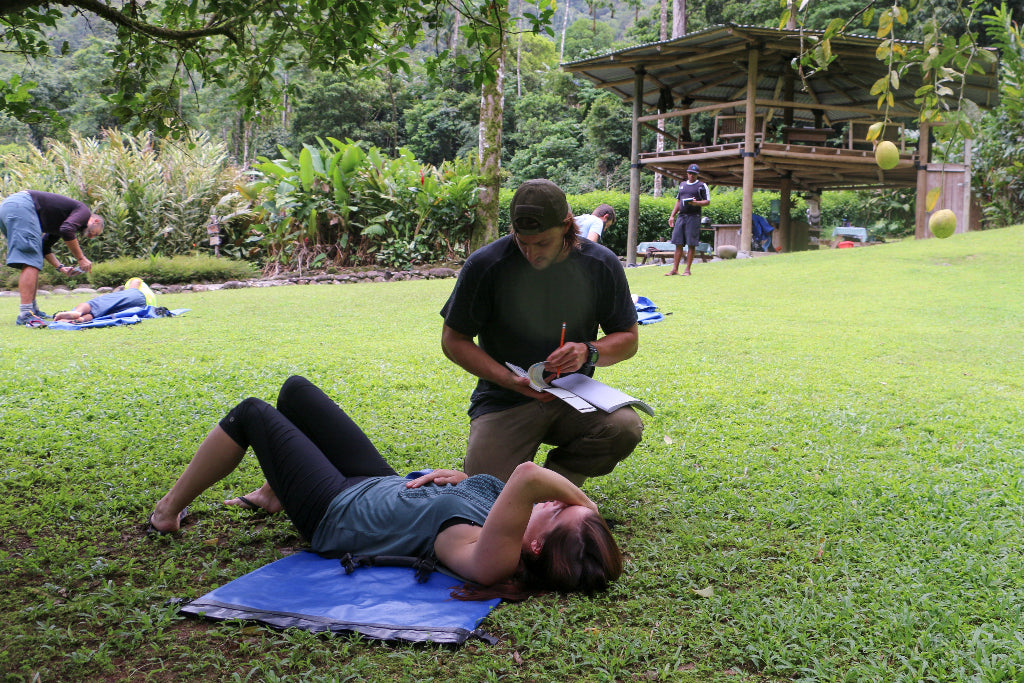
- Pacuare River, Costa Rica — an international WFR certification experience in a remote jungle setting
We're always adding new locations! Check the individual course pages for an up-to-date listing of upcoming WFR courses near you.
Frequently Asked Questions About Wilderness First Responders
What is a Wilderness First Responder?
A Wilderness First Responder (WFR) is someone trained to handle medical emergencies in remote places where help may be hours or even days away. This training is often taken by professional guides, outdoor educators, search and rescue, and people who work and travel in remote areas.
A WFR knows how to assess injuries and treat common ones like wounds and musculoskeletal injuries, and deal with environmental issues like hypothermia, heat illnesses, and lightning. They’re also trained in critical decision making, leadership, and evacuations.
A Wilderness First Responder can perform advanced treatments and provide medications that are not standard for urban first responders and emergency medical technicians (EMTs).
Should I get a WFA or a WFR?
Whether you take wilderness first aid or wilderness first responder training depends on your situation and desired outcome. Wilderness First Responder is professional-level training that’s often required by people who work in remote environments, like guides, instructors, and search and rescue. WFR training is:
- 80 hours compared to 20 for Wilderness First Aid
- More in-depth medical assessment and a broader range of techniques you'll be certified to perform
- More practice with all the skills, including realistic scenarios which develop your ability to perform under pressure
- Covers things like leadership skills, decision-making, and evacuation planning
WFA is for front-country travelers or assistant leaders. It’s not intended for people who are leading groups, or for remote travel.
Is WFR the same as EMT?
No, a Wilderness First Responder (WFR) and an Emergency Medical Technician (EMT) are not the same. A WFR is trained for emergencies in remote areas with limited equipment, when help is hours or days away. An EMT works in regions with ambulances, more equipment, and quick access to hospitals.
Both roles handle medical emergencies, but WFRs focus on long-term care in remote settings.
What can I do with a WFR certification?
A Wilderness First Responder (WFR) certificate will prepare you to assess and manage medical problems in isolated and remote environments. You can lead or assist outdoor trips, work as a professional guide or camp staff, or search and rescue. It's often required for these types of jobs. The WFR is often a stepping stone to more advanced medical or rescue training.
How long is a WFR course?
With Boreal River Rescue, the WFR course is 80 hours. You have a choice to complete the course in 5 or 8 days.
- 8 days: standard in-person course that’s a combination of hands-on outdoor training and classroom instruction.
- 5 days: Complete 30+ hours of online instruction before 5 in-person days of training.
Do I need any prerequisites for WFR training?
The only prerequisite for Wilderness first responder training is that you must be 16 years of age or older. No other experience is necessary.