

ClickCease

Gain the skills to manage medical problems in the backcountry

Belize Wilderness First Responder (WFR)

1,795 USD
8 days with travel (5 day course)
18+ years, no medical experience needed
30+ hours

FOR:

Anyone physically active who travels to remote places, outdoor educators, guides, search and rescue; beginner to advanced

Wilderness First Responder Training

Take your Wilderness First Responder (WFR) course in Belize—and build your medical skills through hands-on training.

Hosted at the T.R.E.E.S. (Toucan Ridge Ecology and Education Society) tropical field station, join a mix of other international travellers and Belizean outdoor educators and scientists for an incredible course.

The 8-day (including travel days) program includes:

  • All transport within Belize from Belize Airport (BZE) onwards
  • Shared lodging in cabins (optional upgrades to private rooms)
  • Field station facilities including kitchen and dining area, platforms with hammocks and lounging spaces, bathrooms with flush toilets and hot showers, tropical swimming holes, and the 200 acre private grounds 
  • All meals — Fresh, delicious, and catered to any diet or allergies
  • Instruction, training materials, and certification from Wilderness Medical Associates (WMA) International
  • Immersive ecology experiences (bat mist netting, expert-led interpretive hikes)

Belize Wilderness First Responder Course Details

Itinerary

Day 1 (Saturday) – Belize Airport pick-up, scenic shuttle , and arrival at Toucan Ridge Ecology and Education Society

  • Travel to Belize — Philip S. W. Goldson International Airport (BZE)
  • Meet the group and instructors and get picked up at 4:30pm at the Belize Airport (schedule your flight to arrive before 3:30pm)*

*Note: If you'll be arriving in Belize on a previous day or different location, we can organize a private shuttle to T.R.E.E.S. Please contact us for cost.

  • Take in the Belizean countryside and jungle-covered hills along the ~90 minute drive
  • Arrive at T.R.E.E.S., get shown around by staff, explore your lodgings, and settle in
  • Enjoy a welcome dinner, our first of many great meals together this week

Day 2 (Sunday) - Acclimatize, connect with the rainforest and the group

  • This day is about getting comfortable with our surroundings, taking in this incredible place, acclimatizing to life in the tropics, and getting to know the members of our group and T.R.E.E.S. staff.
  • After breakfast, we'll head out on an ethnobotanical walk in the rainforest with a local guide where we'll identify plants, learn jungle survival skills, and spot signs of wildlife.
  • In the afternoon you can opt to relax, go for a swim, or take to the trails for a hike, run, or birdwatching

Day 3 to 7 (Monday to Friday) – Wilderness medical training

Gain skills, practice, and certification as a Wilderness First Responder (WFR). Your days will be full of intensive learning, including a mix of classroom sessions, skill workshops, and small group drills and scenarios.

As the course progresses we’ll have larger simulations with makeup and stage blood. On Thursday we’ll also combine a rainforest hike with medical simulations and practice evacuations.

  • Sleep until breakfast or get up early to watch the birdlife and the jungle awake
  • Get a good start with coffee, tea, and a hearty breakfast
  • Mornings usually begin with review as we take up questions, go over case studies, or write a quiz. Learn and hone your skills through a combination of practical drills, presentations, discussions, review exercises and simulations
  • Lunch
  • Get moving and take in the rainforest on a short hiking adventure
  • More course content and awesome learning
  • As you gain confidence with the material, we’ll do more extended simulations
  • On Thursday, we’ll go on a longer hike in the rainforest and do simulations along the way, including treatment, evacuation plans, and transport
  • Dinner
  • Note: The instructor may schedule 1 or 2 evening sessions during the week
  • One evening we'll have a Bat Mist-Netting Workshop where we’ll head into the field at dusk, with the T.R.E.E.S. science education staff, for a hands-on session tracking and identifying neotropical bats, captured safely using fine mesh mist-nets.

Day 8 (Saturday) – Return to Belize Airport

  • After breakfast, shuttle to the Philip S. W. Goldson International Airport (BZE)*
  • We'll schedule an additional very early morning shuttle if anybody needs to catch a very early flight

    *Note: If you plan on continuing your stay and travels in Belize, you can make your own way from T.R.E.E.S. or we can organize a shuttle for you elsewhere. Contact us for cost.
Learning outcomes & certification

Become a Wilderness First Responder

  • Grow your skills and knowledge through learning online ahead of time at your own pace, followed by an intensive and well-run course
  • Increase your confidence and gain experience through realistic scenarios with stage blood and simulated wounds to prepare you for backcountry emergencies
  • Challenge yourself with the guidance of professional, dynamic, and fun instructors who deliver a course that will be one of the best you’ll ever experience

Certification

  • Wilderness First Responder (WFR) certification
  • CPR BLS level certification (CPR for adults, children, and infants. Includes AED training)
  • Included materials: Textbook, SOAP note booklet, waterproof WMA field guide, case studies workbook, notebook (with WMA lecture notes)

Your certification is valid for 3 years from the date of issue.

You can recertify your Wilderness First Responder (WFR) by taking a 3-day or longer WFR Recert course within 3 years of your last certification.

Continuing ed. & community

After your course, you'll be a member in our online alumni community for 3 years, which includes:

  • Continuing ed. sessions for WFRs — case studies, expert guests, curriculum updates
  • Access to free online courses
  • Seminars, discussion threads, Q&A's
Course participants, topics & overview

Course participants

The group will include a mix of Belizean outdoor professionals (educators, scientists, guides, and field staff) and individuals travelling from elsewhere (North America, Europe, etc.) for the course.

Ecology Project International — an organization that runs science education trips with high school students in Belize and Costa Rica — sparked the initiative to run this program. Several of their staff will be taking the course.

We've run a similar program annually in Costa Rica since 2013. Participants on international WFRs usually include:

  • Outdoor educators and guides
  • Wilderness enthusiasts and athletes who travel in remote settings
  • Scientists and researchers who conduct field work
  • MDs, Nurses, PA's, and other healthcare professionals training to respond in low-resource settings
  • Seach and rescue (SAR) team members and first responders
  • Park staff and conservation officers

Course topics

  • General concepts of wilderness medicine and the Patient Assessment System
  • CPR (adult, child, and infant), AED, and basic life support skills
  • Anatomy and major problems of the respiratory, circulatory, and nervous systems
  • Musculoskeletal injury assessment and splinting
  • Spine injury assessment and management
  • Allergies and anaphylaxis
  • Medical emergencies such as stroke and diabetes
  • Severe asthma wilderness protocol
  • Wound and burn management
  • Wilderness protocol for reducing shoulder dislocations
  • Environmental problems such as hypothermia, heat illnesses, lightning, and drowning
  • Backcountry medicine and toxins, bites, and stings
  • Litters, improvised litters and patient carries
  • Evacuations, decision making, and leadership
  • Medical legal issues
  • And more…

Course overview

This program uses the Hybrid WFR format (rather than the standard 8-days)

How the ‘Hybrid WFR’ format works

On the Hybrid WFR, you’ll complete 30+ hours of online e-learning followed by 5-days (45 hours) of in-person learning.

The e-learning includes interactive modules with videos, readings, self-practice assignments, quizzes, and case studies.

You’re required to register at least 4 weeks before the in-person portion begins and complete all of the e-learning before you arrive. *See the technology requirements below*.

Please note before enrolling that the e-learning is mandatory. It takes at minimum 30 hours but many students take significantly more time than that.

The online learning isn’t meant to be crammed into a few days. You’ll get the most out of this course and have the highest likelihood of achieving the certification if you break it up into 1 to 3-hour learning blocks, spaced over 4 to 6 weeks.

As soon as you register, you’ll automatically receive a Student InfoPack with course outlines, packing lists, and logistical info. Then, 7-weeks before the onsite portion, we’ll send you access to the e-learning platform.

On the in-person portion, we can then focus on practical skills, drills, and rescue simulations, because you’ll arrive having already learned much of the theoretical knowledge.

All of our medical courses are intensive; the onsite portion of the Hybrid WFR is even more so: expect full, fast-paced (and fun!) days.

HYBRID TECH REQUIREMENTS

For the 30+ hours of online learning, you’ll need:

  • Access to high speed internet throughout the 30+ e-learning hours
  • A laptop or desktop computer with

To be clear, you don’t need a computer with you at the TREES Field Station

Prerequisites

No medical or wilderness experience is necessary.

You need to be in good physical condition and comfortable walking on uneven and steep terrain.

Assessment and evaluation for certification

Practical assessment is ongoing. There’s a written test on the last day of the course where you need a grade of 80% or higher to pass.

Instructors will do everything they can to accommodate students with different learning styles and needs. Let us know what we can do to help you succeed.

What to pack

NOTE: A packing list is included with your ‘Student Information Package’ (emailed to you when you register)

Synthetic materials such as polyester, nylon, and fleece are great as they dry quickly.

Footwear

  • Hiking shoes or running shoes. Sturdy, lightweight shoes with good grip. These will get wet as some trails where we'll be training cross a shallow creek.
  • Shoes or sandals — A second set of footwear that you can keep dry and wear around the field station
  • Flip-flops for the shower
  • Optional: Rubber boots for creek crossings and wet ground

Clothing

  • Lightweight quick-dry long pants (at least 2)
  • Quick-dry long-sleeved shirts, ideally with a collar, for sun and bugs (at least 2)
  • T-shirts for layering
  • Lightweight rain jacket
  • Fleece or wool sweater (especially for February, nights can be cooler)
  • Undergarments and sports bra
  • Long socks: more pairs than you think you need
  • Shorts and summer clothes for evenings
  • Swimwear (there are jungle swimming holes on site)
  • Wide-brimmed sun hat
  • Optional: Buff or bandana
  • Optional: Sarong

Course items

  • A backpack that you can carry during simulations to carry extra food, water, clothing, equipment, etc.
  • A stuff sack, book bag, or drybag for you to store your books
  • Something to sit and lie on outside such as an ensolite pad
  • Watch (for taking vital signs)
  • Water bottle
  • A set of clothing that can be stained and cut during simulations
  • Optional: Waterproof paper and ‘space pen’ or grease pencil

Personal and travel items

  • Passport and travel documents
  • Towel or pack towel for showers, and a second towel or pack towel for swimming
  • Personal toiletries (soap, shampoo, etc.)
  • Prescription glasses or contacts (bring an extra pair of glasses & a copy of your eyeglass prescription)
  • Headlamp with extra batteries
  • Insect repellent: 25% DEET or citronella-based. DEET damages plastics, so keep it off your watch, sunglasses, and dry bags.
  • Sunscreen, SPF 30+, and lip balm with SPF
  • Personal medications
  • Optional: mosquito head net or bug jacket
  • Optional: Binoculars / journal / books
  • Optional: Camera

We will provide

  • Bedding
  • Pillow
Lodging & our local hosts

Our hosts - The Toucan Ridge Ecology and Education Society (T.R.E.E.S)

For this program, we partner with T.R.E.E.S., a grassroots conservation organization that established the field station in 2012.

The biologist-managed facility focuses on tropical ecology research and post secondary education. Local community members are involved in all aspects of the centre's programs and conservation projects.

The friendly small staff team of site managers, educators, scientists, guides, and kitchen staff work together to make sure everybody feels comfortable and at home.

T.R.E.E.S. is situated on 200 acres of private land in the Maya Mountain Foothills, a global biodiversity hotspot. Over 10 km of trails run through the property, and connect to the neighbouring Sibun Forest Reserve.

The staff team is passionate about biology and conservation and they're excited to have each guest experience tropical nature and Maya Mountain biodiversity first hand!

Lodging

Living at a tropical field station is sure to be a highlight of your experience in Belize!

Shared lodging is included with the course. Participants will be housed with others of the same gender in either a Jungle Cabin or the Bunkhouse, which have 3 to 6 single beds.

Optional private cabin upgrades (single supplement)

Note: You can book any of the following cabins for yourself (if still available) or they can also be shared by two people. If you're taking the course with somebody who you'd like to share a private cabin with, you can split the cost between two of you. (T.R.E.E.S. charges the same total for 1 or 2 people.)

You'll have the option to choose these add-ons on the course booking checkout page.

Note: The Casita and Fern Cabin each have one bedroom with multiple beds. The Mayflower Cabin and Jaguar House and each have two bedrooms.

  • Fern Cabin: A quaint, clean, and comfortable wooden cabin with a private deck overlooking the Maya Mountains and lush jungle. ($242 USD for 7-nights)
  • La Casita: A charming “little house” with its own deck and mountain views, a well-equipped kitchenette, a small fridge, and a private bathroom. ($336 USD for 7-nights)
  • Mayflower Cabin: A family-style cabin with a private bathroom and kitchen, two bedrooms with two extra-large double beds or four single beds, and a pull-out couch. (370 USD for 7-nights)
  • Jaguar House: A fully furnished two-bedroom wooden house in a private fenced yard, with a gorgeous view of the Maya Mountains. It has a full kitchen, dining room, living room, full bathroom, a screened-in veranda, and a deck with hammocks. It has its own driveway entrance, but it’s only a short walk to the communal facilities. ($618 USD for 7-nights)

Field station facilities

  • Commercial kitchen, dining area, and communal kitchen that anybody staying onsite can use
  • Bathrooms with flush toilets, sinks, and hot water showers
  • Screened platform with hammocks and a small climbing wall for yoga, lounging, and course work
  • 200 acres private grounds, 10 km of trails
  • Natural jungle swimming holes

Meals

All meals from day-1 dinner through day-8 breakfast are included with the course.

Meals are prepared onsite by local staff and include a mix of Belizean dishes and international classics.

The T.R.E.E.S. kitchen team is great at working with any diet (vegan, vegetarian, lactose intolerant, celiac, etc.). After you register, we'll send you a questionnaire where you can let us know about any allergies and dietary needs.

Purified drinking water is available at all times. Coffee and tea are included!

There is also the Toucan Cafe onsite. The facility is licensed and you can buy beer (after course hours) at Belizean prices, soft drinks, smoothies, etc.

Wifi and cell signal

  • Free wifi is available in the Main Hall. No wifi in the cabins
  • There is cell signal at the cabins. You can use a Digicell e-SIM card in your international (unlocked) phone. T.R.E.E.S. sells these sim cards for $15 US and data plans for $6 US/GB, however please give us advance notice if you'd like them to have a sim card available on the day of your arrival.

Travel Planning and Insurance

Student InfoPack and forms

Once you've booked, we'll send you a detailed Student InfoPack and confirmation email. Inside, you'll find:

  • Packing lists and travel-planning details
  • Links to the online waiver and participant questionnaire
  • Links to WMA's online learning platform

Travel to Belize

  • Our meeting location is Philip S. W. Goldson International Airport (BZE)
  • We meet at 4:30pm on Saturday (Day 1). Please schedule your flight to arrive before 3:30pm*

Travel after the course

  • We'll shuttle everybody back to Philip S. W. Goldson International Airport (BZE) on Saturday morning (Day 8)*
  • We'll schedule the shuttle timing based on everybody's flight times. We'll schedule an additional very early morning shuttle if needed

*Extending your stay: If you plan on being in Belize before the course or staying for additional time afterwards, we can organize a private shuttle. Please contact us for cost.

Travel medical insurance

You need to have adequate travel medical insurance. It should cover you for all emergency medical expenses, emergency transport within Belize, and emergency transport back to your state or province of residence.

A copy of your policy must be sent to Boreal River Rescue before your departure. Please carry a copy of your policy including the name, number, and emergency contact/claims number of the insurance provider with you in Belize.

Health and immunizations

We recommend that you visit your family doctor or travel clinic before your trip for up to date recommendations on health and safety while traveling in Belize.  As with general travel to any region, it is recommended that you are immunized against Tetanus, Typhoid, Hepatitis A, and Hepatitis B. Malaria is not common in Belize and travelers generally do not take anti-malaria medication. Mosquitoes can and do transmit Dengue Fever and Malaria. 

The use of long pants, shirts, and repellent at dusk greatly reduce exposure to mosquitoes.

Trip cancellation insurance

While not necessary, it is recommended that you look into purchasing trip cancellation insurance as we cannot refund or credit course tuition if you have to leave the program early or cancel at the last minute.

Please don't hesitate to contact us if you have any questions at all about Belize travel or the course!

Upcoming Belize Wilderness First Responder Courses

Jan 30-Feb 6, 2027 (5-day) Middlesex, Belize English »
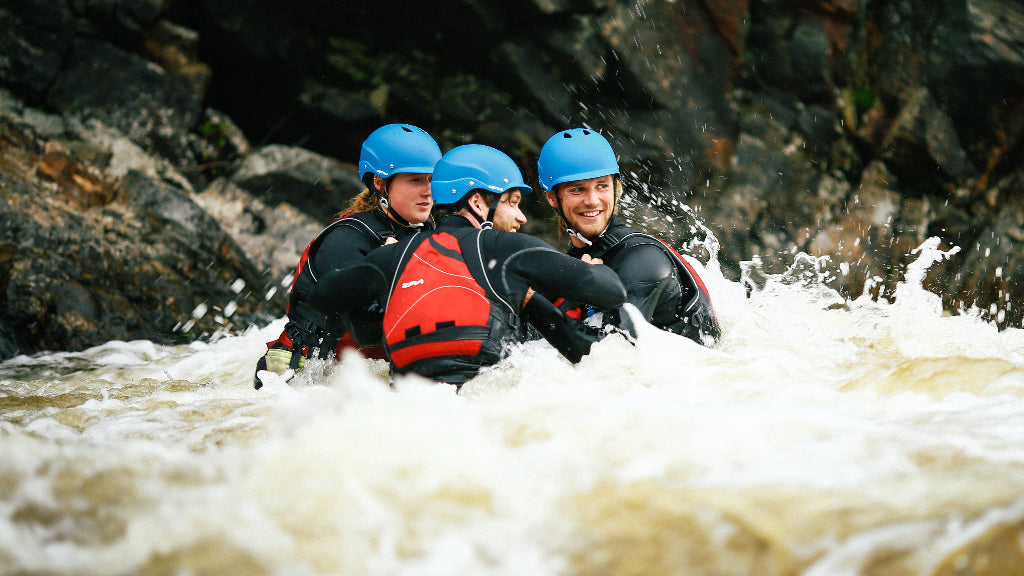
group of whitewater rescue student

Not seeing what you're looking for?

Set up a private course for your group — your location or ours.

Learn about group training.

Or ask us about other training locations and dates. We run courses all over Canada.

Contact us to ask about a new location or date.

Approved Training Provider

Boreal River Rescue is an Affiliate Provider of WMA Canada which is an approved first aid training provider under the Workplace Safety and Insurance Board (WSIB) First Aid Program in Ontario.

A digital graphic card for the 'First Aid Program' showing 'Approved Training Provider' text, the 'WSIB Ontario' logo, and a QR code on a white background with a blue border.